First Word
CompletedA one-minute film made end to end by one AI agent under my direction: script, generated cast, public-domain archive, voices, score, edit and mix. The film, every source file it is built from, the pipeline, and the production record are open source.
Overview
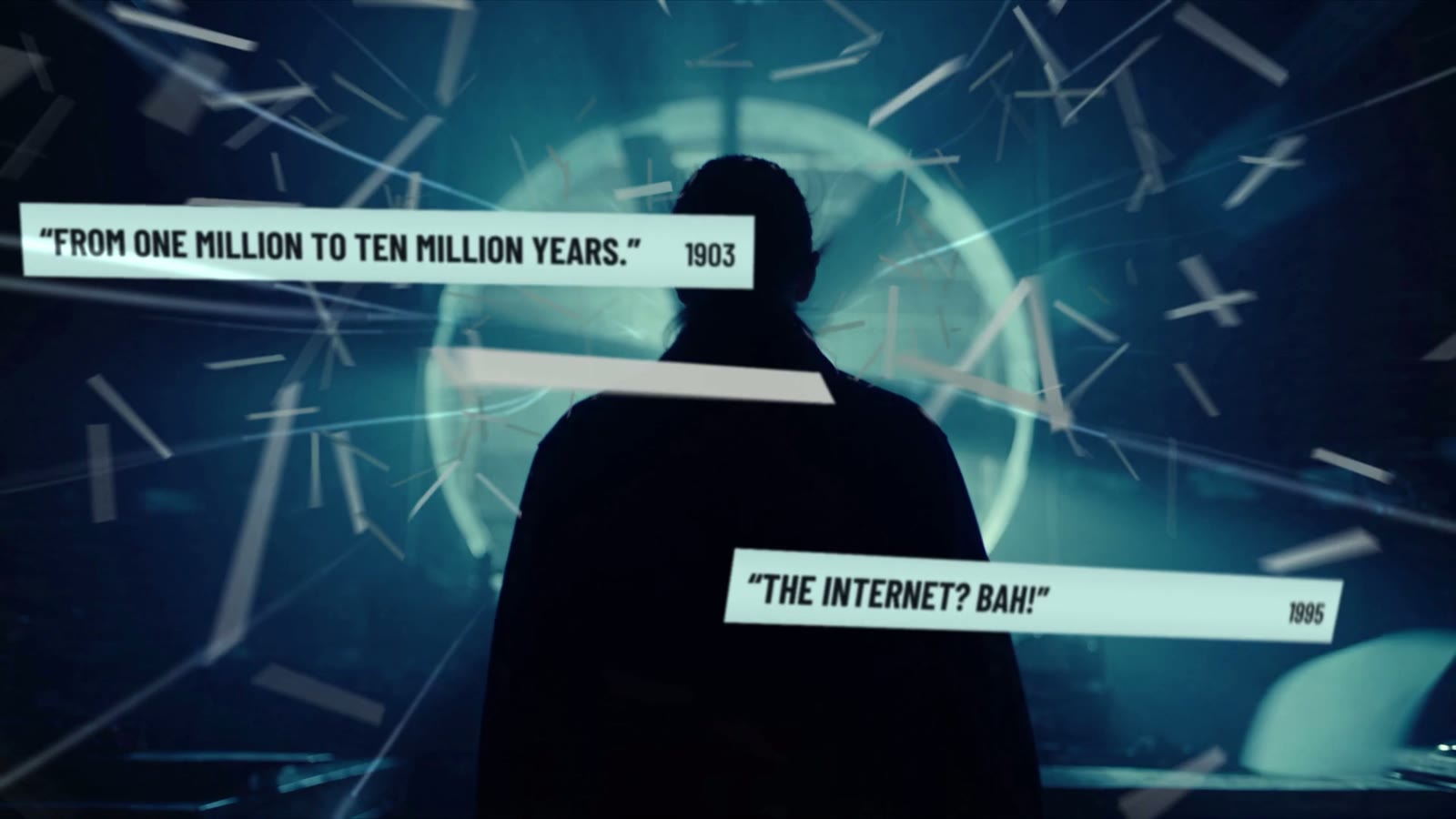
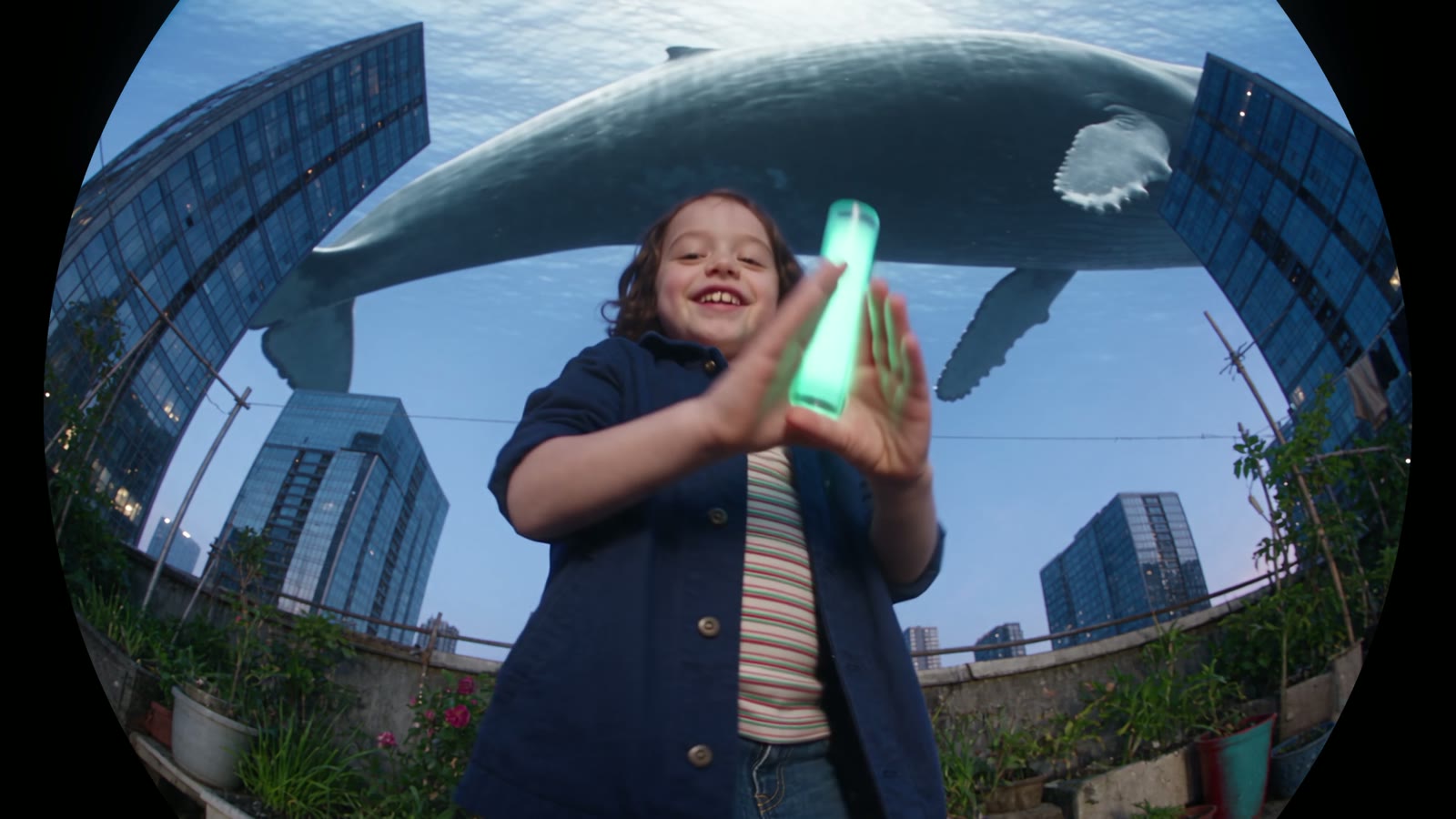
First Word is a 60-second film about AI and the future: 98 shots at 24 frames a second, cut to a 144 BPM grid. Nothing in it was filmed.
I made it to test one question: can a single agent do the jobs of a small film studio? Claude Fable 5.2, running in Claude Code, worked as writer, researcher, casting director, editor, sound designer and finishing house. I worked as the director. I set the brief and the persona, approved the plan and the budget, and reviewed every version by watching and listening.
Watch the film and explore every shot
What the agent made
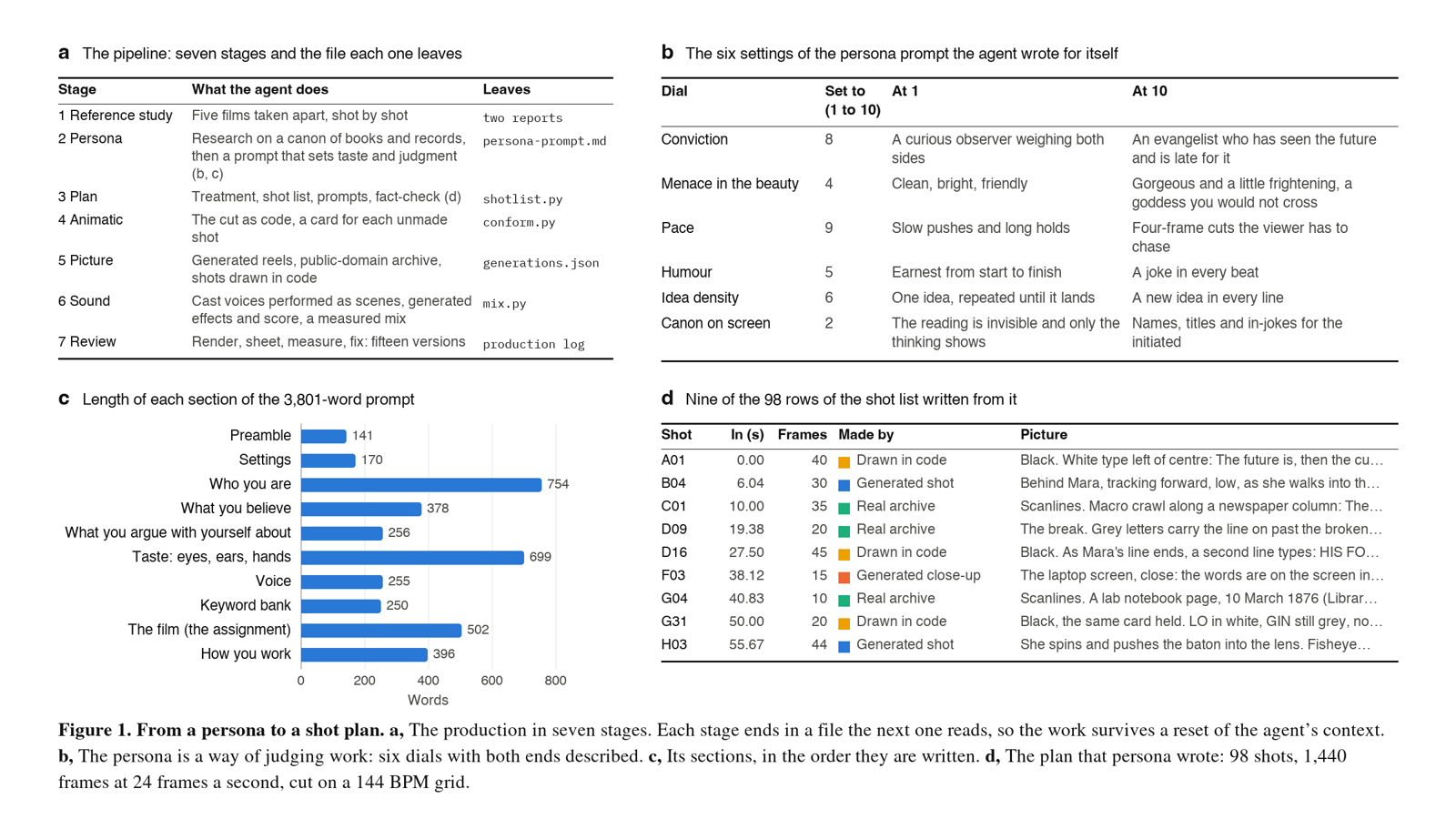
- A reference study. It took apart a 60-second reference film and four style references shot by shot: cut lengths, how each picture was made, tempo, sound.
- A persona. It researched a canon of books and records and wrote a 3,800-word system prompt with six numbered dials, which it then worked from.
- A plan. A treatment, a 100-row shot list, the generation prompts, and a fact-check of every claim the film makes.
- The picture. Generated takes from Seedance 2.5 on Runway, thirteen shots of real public-domain archive with a rights record for each, and shots drawn entirely in code.
- The sound. Licensed voices from the ElevenLabs Voice Library, each scene performed as one conversation, plus generated effects and a generated theme cut to the picture.
- The film. Cut, captioned and mixed in about 8,400 lines of Python, then finished as 1080p, HDR and vertical masters.
The Edit as a Program
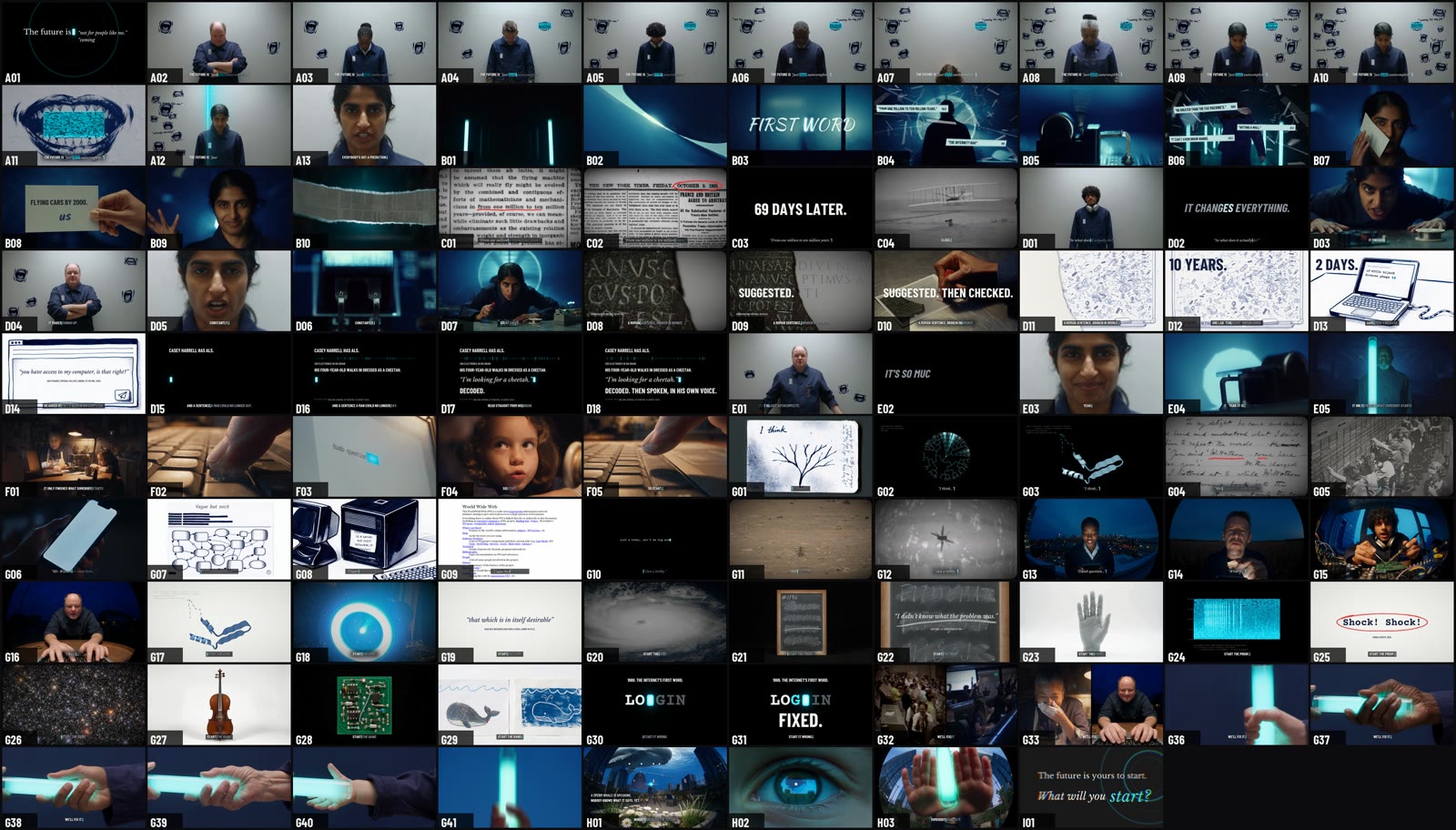
The cut is code and data. Every shot is a row: where it starts, how long it lasts, how its picture is made, what is said and heard, how it cuts. A conform builds the film from those rows and draws a placeholder card for any shot that does not exist yet, so a complete, watchable film existed from the first hour. Every change after that was a full re-render.
This also kept the work coherent across six resets of the agent’s context. The shot list, the timing data, a production log, the cost ledger and a short list of rules learned from review were the state. The renders were disposable.
Verification Without Perception
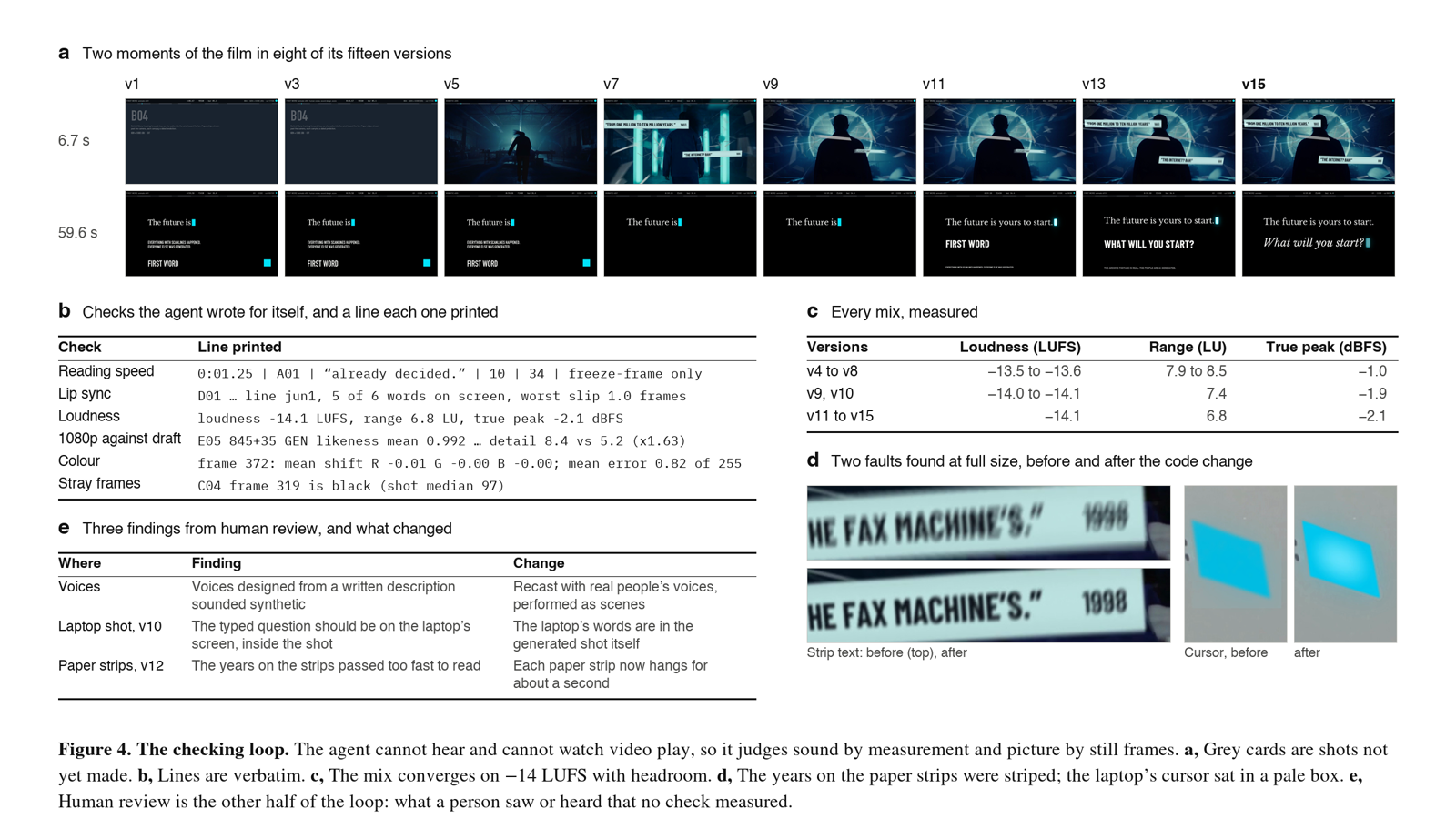
The agent cannot hear, and it cannot watch video play. It judged picture on contact sheets of rendered frames, and sound by measurement: loudness, true peak, energy in each frequency band, and where each hit’s sharpest moment lands against its frame. Lip sync was set from transcribed audio, and legibility from a reading-load report on every line of on-screen text.
Fifteen versions went through that loop. The repository records sixteen failures and what caught each one. The agent’s own checks caught what could be turned into a number or a still frame: effects landing late, a wrong colour matrix, its own notes drifting away from the approved plan. Human review caught what could not: voices that sounded synthetic, graphics that looked like placeholders, text that passed too fast to read. Several of the checks now in the pipeline exist because a person found the fault first.
Constraints
- No face goes into the video model as a reference. The provider refuses it, and the refusal was not worked around. Each character is generated in one job from a fixed written description, and all of that character’s shots come from that one take.
- Everything real carries one visual treatment, and nothing generated carries it. Real events are never re-staged with generated people.
- No paid call could take the ledger past a fixed cap, and every call was logged when it was submitted.
Open Source
The repository is the whole production except the ProRes master: the film, every generated take and still, every voice line, effect and stem, the pipeline, the persona, the plan, the production log and the failure analysis. From a clean copy, the score, the mix and the 1080p master rebuild byte for byte.
The project site plays the film, loops any of the 98 shots with its row of data, lets you switch the four audio stems on and off, and shows four of the fifteen versions side by side.
Built over about 17 hours on 10 and 11 November 2026. Video generation cost $200; the agent’s tokens come to about $480 at API pricing.
Links
Gallery