AI Demand Generation Engineer & GTM Systems
CompletedOne of the early AI GTM builders behind Rootly's Clay-featured AI Demand Generation Engineer motion: autonomous account research, lead scoring, incident-triggered outreach, and personalized outbound at startup scale.
Overview
I was one of the early AI GTM builders working before “GTM Engineer” became a default startup role. For Rootly, I built the AI Demand Generation Engineer motion later featured in Clay’s Rootly customer story: autonomous account research, lead scoring, incident-triggered outreach, and personalized outbound powered by Clay.
The useful lesson was not “replace SDRs with AI.” It was narrower and more interesting: a technical marketer could encode the sales team’s context into workflows, connect those workflows to live buying signals, and let a small team run an outbound motion that previously required more people and more tools.
Rootly. Built an AI-powered SDR engine using Clay’s AI agents to monitor incident signals and trigger outreach in real time. The system automated research, enrichment, scoring, and initial messaging; produced ~50 personalized emails/day; and consolidated a fragmented outbound stack around Clay. Clay’s case study framed this as a new AI Demand Generation Engineer role.
myPocketCFO. A six-month GTM engagement for their AI CFO platform: Clay-Apollo-HubSpot integrations, Facebook/LinkedIn ad campaigns, and outbound sequences targeting Shopify sellers. Delivered 12+ qualified meetings and a documented lead-gen framework on a performance-based model.
Rootly: AI SDR Engine Architecture
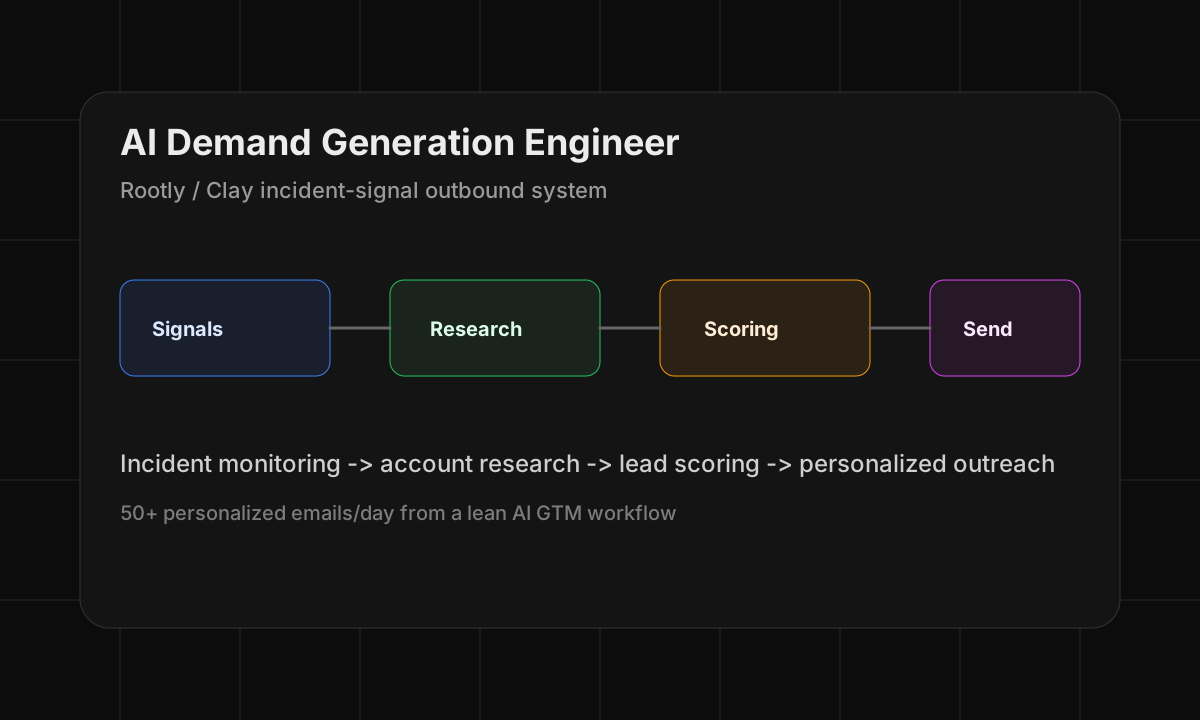
I architected and implemented a complete autonomous SDR system from scratch. The system had four important layers:
Sales Knowledge Base Before automating outreach, I turned the team’s best sales knowledge into reusable context:
- Analyzed previous sales calls and customer conversations
- Studied successful and unsuccessful email campaigns
- Built an Airtable database of pain points, roles, objections, and messaging angles
- Used custom GPTs to analyze emotional patterns in successful sales conversations
This mattered because generic personalization is just template spam with a variable in it. The system needed Rootly-specific knowledge about who feels incident pain, why those moments matter, and which messages sound credible.
Intent Signal Waterfall Design
I built a three-tier scoring system in Clay that prioritized leads based on real-time signals:
- Tier 1 (Yes - Immediate Outreach): Companies experiencing active incidents, posting negative G2 reviews about competitors (PagerDuty, Opsgenie), hiring SRE/DevOps roles, or showing service degradation on Downdetector
- Tier 2 (Maybe - Nurture): VC-backed companies raising Series A/B, recent product launches, security breach announcements
- Tier 3 (No - Filter): Low ICP fit, insufficient engineer headcount, or non-tech sector
The waterfall logic ran in Claygent (Clay’s AI researcher), which automatically enriched leads from LinkedIn, job postings, and tech stack signals, assigning scores without human input.
Real-Time Incident Monitoring & Trigger System
I integrated Rootly’s internal incident monitoring tool with Clay via Make.com webhooks. When a target company experienced an incident:
- Webhook fires to Clay with company domain and incident metadata
- Claygent researches decision-makers (SRE leads, VPs of Engineering) and their recent LinkedIn activity
- AI generates personalized messages referencing the specific incident: “Saw your team had a 45-minute outage yesterday. Rootly’s customers resolve incidents 3x faster…”
- Smartlead deploys emails within 5 minutes of trigger, before the prospect’s pain subsides
This reduced response time from hours (manual monitoring) to minutes (autonomous detection).
Multi-Agent Orchestration
The system ran on Make.com workflows connecting 6+ platforms:
- Apollo: Initial lead sourcing for contact details and company firmographics
- Clay: Central enrichment engine running 100+ data source lookups via waterfall
- Firecrawl: Scraped company websites for recent news, product announcements, and tech stack details
- OpenAI API: Generated personalized intro lines, value propositions, and email variants for A/B testing
- Smartlead: Managed email warm-up, inbox rotation, and deliverability at scale
- Dripify: Automated LinkedIn connection requests and follow-up sequences
- Salesforce: Bi-directional sync for CRM data and engagement tracking
AI Content Generation Pipeline
I built a prompt chain that created hyper-personalized messaging:
- Context Assembly: Clay aggregated intent signals (recent incident, G2 review sentiment, hiring patterns)
- Prompt Engineering: Used few-shot examples from Rootly’s best-performing SDR (Andres) to teach the model tone and structure
- Dynamic Generation: Claude produced 3 variants per prospect, each referencing different signals
- Human-in-the-Loop: Rootly’s SDR reviewed Tier 1 outreach before send-off; Tier 2/3 ran fully autonomous
Performance & Case Study
- End-to-end automation of list-building, enrichment, and initial outreach.
- ~50 personalized emails/day per AI Demand Gen Engineer.
- Cost consolidation: replaced Apollo, UserGems, and 6sense with a Clay-centered workflow, saving ~$2K/month.
Clay featured Rootly as a case study covering the “AI Demand Generation Engineer” pattern. The case study quotes JJ Tang (Rootly’s CEO) on how this changed their outbound model.
myPocketCFO: 30-Day GTM Sprint
What They Do: myPocketCFO provides AI-powered financial management for Shopify sellers and CPG brands, helping founders build books, understand numbers, and create lender/investor-ready reports. Clients include businesses growing 30%+ annually.
My Role: AI GTM Engineer for a 1-month intensive engagement (July-August 2024), building their entire outbound and performance marketing infrastructure. The role was extended to a six-month period to maintain the project.
Architecture:
Week 1: Foundation
- Clay + Apollo integration: Built targeted segments of Shopify sellers ($1M-$10M revenue) using Apollo’s firmographic filters, enriched with Clay for tech stack and hiring signals
- HubSpot CRM: Designed funnel stages (Lead → MQL → SQL → Opportunity) with custom properties for Shopify GMV, payment processor, and inventory size
- Intent Signals: Identified sellers hiring for operations/finance roles, recently raised capital, or using specific accounting tools (QuickBooks, Xero)
Week 2: Campaign Launch
- Email outbound: Created 3-sequence cadences in Clay, personalized based on Shopify store size and growth rate.
- Facebook/LinkedIn ads: Built creative variants targeting “tired of spreadsheet CFO” pain points. Managed $50/day budget, optimized for demo requests
- Shopify Partner outreach: Scraped Shopify Partner directory, identified 200+ agencies serving target clients, launched co-marketing campaign
Week 3: Optimization
- A/B testing: Tested subject lines (question vs. statement), email length (short vs. detailed), and CTA (demo vs. free trial)
- Retargeting: Launched ads for visitors who hit pricing page but didn’t convert
- Community outreach: Posted in Reddit r/shopify, Quora threads about bookkeeping automation, CPG Facebook groups
Week 4: Scale & Handover
- Segment expansion: Built new campaigns for Amazon sellers and TikTok Shop merchants
- Performance analysis: Delivered report showing over 15 meeting requests, and scalable playbook
- Documentation: Created SOPs for Clay workflows, email templates, ad audiences, and HubSpot automation
Status
Both engagements delivered working autonomous GTM systems. The pattern these projects established: a single technical builder orchestrating agents, data, and workflows can accelerate sales development while improving personalization and reducing cost. Useful as a data point, with the caveat that the approach has limits at very small ICPs.